
Tirumala Tirupati: A Sacred Abode of Lord Venkateswara
4/9/2025
“Govinda, Govinda!”
Nestled in the Eastern Ghats of Andhra Pradesh, Tirumala Tirupati is one of the most revered pilgrimage centres globally, drawing millions of devotees annually. The temple of Lord Venkateswara, also known as Tirupati Balaji, is situated on the Tirumala hills, which are part of the sacred Seshachalam range. It’s considered the wealthiest temple due to the immense donations it receives and is one of the most visited religious sites in the world.
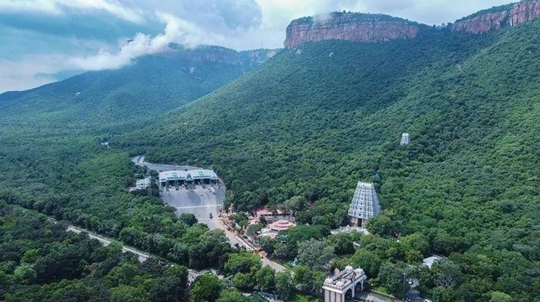
Devotees believe that Lord Venkateswara, an incarnation of Lord Vishnu, acts as the protector and preserver of humanity during the current age of Kali Yuga. The town of Tirupati at the foot of the hills serves as the base for pilgrims, and the journey up to the temple — whether by climbing barefoot or traveling by road — is seen as a sacred act in itself. The temple is majestically located about 853 meters above sea level.
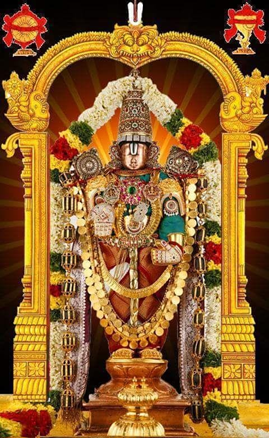
Tirumala is not only a religious center but also a cultural and social hub, managed by the Tirumala Tirupati Devasthanams (TTD). Tirumala is a vibrant hub of spirituality, culture, and society. Every day, thousands of devotees participate in darshan (divine viewing) to seek blessings for health, prosperity, and spiritual upliftment. The temple operates with a continuous cycle of rituals, sevas, and offerings, symbolizing a living tradition of devotion.
The temple’s rich legacy is a blend of ancient traditions and modern progress, welcoming people from all backgrounds, regardless of their caste, creed, or nationality, who are united by their faith. Furthermore, the temple actively contributes to society through various initiatives, including annadanam (free food), healthcare, education, and cultural preservation.
HISTORIC AND SPIRITUAL BACKGROUND
The spiritual significance of Tirumala is deeply rooted in the Hindu Puranas. According to ancient texts, the Puranas, Lord Vishnu took the form of Venkateswara (Balaji) to protect mankind from the challenges of Kali Yuga. Legends recount a story where Lord Vishnu left his celestial abode, Vaikuntha, descended to earth, choosing the Tirumala hills as his residence after a disagreement with Goddess Lakshmi(consort of Vishnu).
Another famous legend recounts that Sage Bhrigu, while testing the Trinity (Brahma, Vishnu, Shiva), kicked Lord Vishnu in the chest. Goddess Lakshmi, who resides in Vishnu’s chest, felt insulted and left Vaikuntha. Unable to bear separation, Vishnu came to earth in search of her and settled in Tirumala. Later, he married Padmavati Devi, the daughter of King Akasha Raja, at Tiruchanur (Alamelu Mangapuram).
It is believed that to conduct the wedding, Lord Vishnu borrowed a huge amount of wealth from Kubera, the treasurer of the gods, promising to repay it until the end of Kali Yuga.
Devotees consider their offerings at the Tirumala Hundi (donation box) as contributions towards repaying this divine loan.
The seven hills of Tirumala are believed to represent the seven heads of Adisesha (the serpent on whom Vishnu rests), hence Tirumala is also called Seshachalam. Every hill has its own spiritual significance, making the journey itself a form of worship.
Because of these Puranic roots, Tirumala is often referred to as the Kaliyuga Vaikuntham, meaning the abode of Vishnu in this age of darkness. Devotees firmly believe that by worshipping Lord Venkateswara, one is relieved of sins and granted spiritual liberation.
HISTORICAL DEVELOPMENT
The history of Tirumala spans several centuries, with evidence of its prominence found in inscriptions, scriptures, and royal patronage. The earliest literary references come from the Tamil Alwars (Vaishnavite saints) who sang hymns in praise of Lord Venkateswara between the 5th and 9th centuries. These hymns established Tirumala as a central pilgrimage site in South India.
The temple received support from successive dynasties. The Pallavas (9th century) were among the earliest rulers to patronize the temple, contributing to its initial expansion. Later, the Chola dynasty (10th–12th century) further enriched the temple with endowments and structures.
The golden age of Tirumala came under the Vijayanagara Empire (14th–16th century). Kings such as Krishnadevaraya and his successors made significant contributions. Krishnadevaraya visited the temple multiple times and donated golden ornaments, including a golden crown for the deity. Several mandapams and gopurams were constructed during this period, giving the temple much of its present grandeur.
Inscriptions found on the temple walls document donations of land, jewelry, and money, indicating the temple’s central role in socio-economic life. The temple also became a hub for promoting art, music, and literature, especially the compositions of Annamacharya, who dedicated thousands of devotional songs (sankeerthanas) to Lord Venkateswara.
During the colonial period, temple administration changed. In 1933, the Tirumala Tirupati Devasthanams (TTD) was established by the Madras Presidency to regulate the management of the temple. Since then, TTD has been overseeing temple affairs, ensuring smooth functioning, transparency, and the welfare of devotees.
Today, the temple stands as a blend of ancient tradition and modern governance, maintaining its position as one of the most important religious centers in the world.
ARCHITECTURE OF THE TEMPLE:-
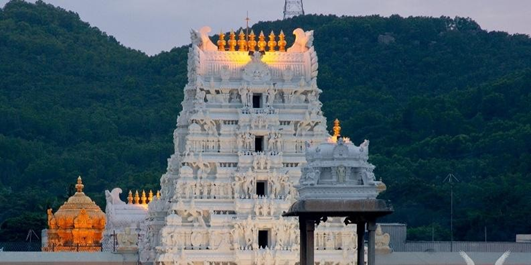
The Tirumala temple is a splendid example of Dravidian architecture, which flourished in South India under dynasties like the Pallavas, Cholas, and Vijayanagara kings. The temple complex spreads across several acres, with gopurams, mandapams, shrines, and sacred tanks. Its main sanctum, the Garbhagriha (inner chamber), houses the idol of Lord Venkateswara, believed to be self-manifested (Swayambhu).
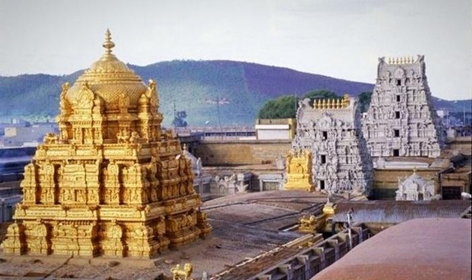
The sanctum is crowned with the Ananda Nilayam Vimana, a golden tower that sparkles in sunlight. The vimana is covered in gold-plated copper sheets, a symbol of devotion and grandeur. The temple has four entrance gopurams (towered gateways), decorated with sculptures and carvings that depict Puranic scenes.
Inside the complex, several halls or mandapams serve as venues for rituals and sevas. The Ranga Mandapam, Kalyana Mandapam, and Tirumamani Mandapam are notable examples, built in Vijayanagara style with intricately carved pillars. The Bangaru Vakili (Golden Entrance) leads to the sanctum, restricted only to priests.
One of the remarkable aspects is the idol of Lord Venkateswara, standing tall at about 8 feet, adorned with jewels, silk garments, and sacred ornaments. The idol’s beauty is enhanced by a mysterious charm: some believe the idol has divine characteristics, including warmth and subtle growth over centuries.
The temple also houses shrines of Goddess Lakshmi, Vishvaksena (commander of Vishnu), and Ramanuja (Vaishnavite philosopher). The sacred Swami Pushkarini (temple tank) is considered the place where Garuda brought the waters of all holy rivers. Devotees take a dip before darshan as purification.
Thus, the architecture of Tirumala is not just physical beauty but a spiritual design, symbolizing divinity, protection, and eternal dharma.
Sacred Geography of Tirumala
The Tirumala hills are also known as the Seshachalam hills, consisting of seven peaks representing the seven hoods of the divine serpent Adisesha. These peaks are:
1. Seshadri
2. Neeladri
3. Garudadri
4. Anjanadri
5. Vrushabhadri
6. Narayanadri
7. Venkatadri (where the temple stands)

Each hill has unique spiritual significance. For example, Anjanadri is believed to be the birthplace of Lord Hanuman, while Vrushabhadri represents the place where a demon-turned- bull was subdued by Vishnu.
The pilgrimage route to Tirumala itself is sacred. There are two paths for climbing: Alipiri Mettu (11 km, 3550 steps) and Srivari Mettu (2.1 km, 2388 steps). Devotees often climb barefoot, carrying “Irumudi” (offerings), chanting Govinda’s name.
Several holy water bodies enrich the landscape:
• Swami Pushkarini — The temple tank, considered as sacred as the Ganga.
• Akasha Ganga — A waterfall used for temple rituals, including bathing the idol.
• Papavinasam — A sacred spot where sins are believed to be washed away.
- Chakra Teertham — Associated with Sudarshana Chakra, purifying pilgrims.
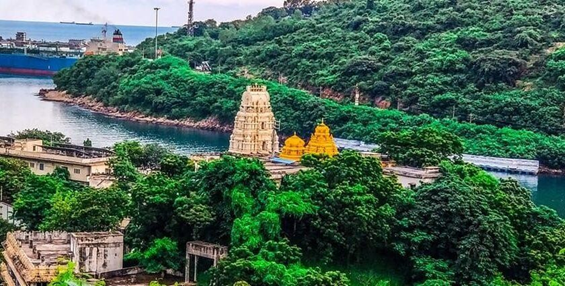
The natural forests around Tirumala are filled with medicinal herbs and sacred flora, reinforcing its divine aura. For devotees, every stone, stream, and hill carries spiritual energy, making Tirumala not just a temple but a living pilgrimage landscape.
Daily Rituals (Nitya Kainkaryams)
Tirumala temple follows a strict schedule of daily rituals, known as Nitya Kainkaryams, performed with precision since ancient times. Each ritual has a symbolic meaning and is conducted according to the Vaikhanasa Agama tradition.
The day begins with Suprabhatham at 3:00 AM, when verses composed by Prativadi Bhayankaram Annan are recited to wake up the Lord. This is followed by Tomala Seva, where flowers are offered to the deity.
Next comes Archana and Koluvu, where the Lord is worshipped with 1008 names, and daily activities are symbolically reported to Him. The Sarva Darshan for devotees begins after this.
Other daily rituals include:
Nivedana — Offering food to the Lord before it is distributed as prasadam. Arjitha Sevas — Rituals for devotees who have booked tickets, such as Kalyanotsavam (celestial wedding) or Unjal Seva (swing ritual).
Ekantha Seva — The last ritual at night, where the Lord is put to rest with lullabies and camphor lights.
Each ritual is accompanied by music, Vedic chanting, and offerings, ensuring that the Lord is treated as a living deity. This daily cycle of worship highlights the unique feature of Tirumala: the deity is alive, cared for, and celebrated every moment of the day.
Sevas Offered to Devotees
Devotees can participate in various Arjitha Sevas (paid services) to express devotion and seek blessings. Some of the major sevas include:
• Suprabhata Seva — Waking the Lord with sacred hymns.
• Thomala Seva — Offering flower garlands.
• Archana Seva — Chanting divine names on behalf of devotees.
• Kalyanotsavam — Symbolic wedding of Lord Venkateswara and Goddess Padmavati.
• Unjal Seva — Lord is seated on a swing, accompanied by music.
• Sahasra Deepalankara Seva — Worship with thousands of lamps.
• Vasanthotsavam — Festival of colors and fragrance, performed in summer.
For common devotees, darshan is available through:
• Sarva Darshan (free darshan)
• Divya Darshan (for pilgrims climbing steps)
• Special Entry Darshan (₹300 ticket)
• VIP Darshan (for donors and protocol visitors)
These sevas are immensely popular and often booked months in advance through TTD’s online portal. By participating, devotees feel personally connected to the Lord, making their pilgrimage deeply fulfilling.
Prasadam (Sacred Offering)
One of the highlights of Tirumala is its prasadam, offered to devotees after darshan. The most famous among them is the Tirupati Laddu, which has become synonymous with the temple itself. Prepared in the temple kitchen called the Potu, the laddu is made of gram flour, sugar, ghee, cardamom, and dry fruits. In 2009, it received the Geographical Indication (GI) tag, ensuring its authenticity.
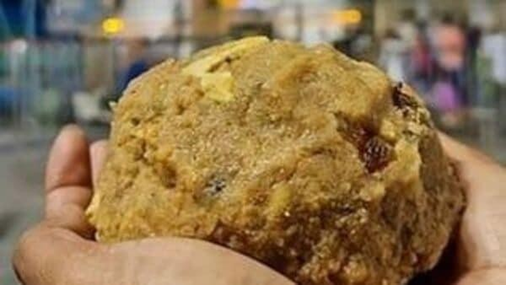
Apart from laddus, other prasadam varieties include:
• Pulihora (Tamarind rice) — A tangy rice dish offered daily.
• Daddojanam (Curd rice) — Cooling and refreshing, especially in summer.
• Chakkara Pongal (Sweet rice with jaggery and ghee) — Festive prasadam.
• Appam and Jilebi — Prepared during special occasions.
The temple kitchen, one of the largest in the world, operates with strict hygiene and spiritual discipline. Cooking is done using firewood and traditional vessels, with priests supervising. Food offered to the deity first becomes Naivedyam and is later distributed as prasadam to devotees, symbolizing divine grace.
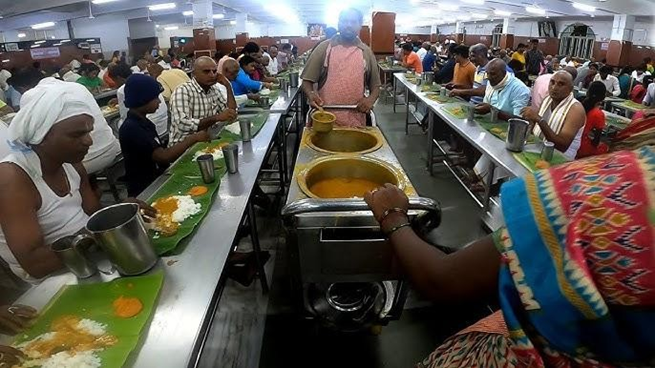
The distribution system is highly organized, ensuring that lakhs of devotees receive prasadam every day. For pilgrims, the taste of the laddu or pulihora is not just food — it is a blessing from Lord Venkateswara.
Festivals in Tirumala
Tirumala celebrates numerous festivals throughout the year, each with grandeur and devotion. The most significant is the Srivari Brahmotsavam, a nine-day annual festival, attracting millions of pilgrims. During Brahmotsavam, the deity is taken in colorful processions on various vahanams (chariots or mounts) such as Garuda Vahanam, Hanumantha Vahanam, and Rathotsavam (Chariot Festival).
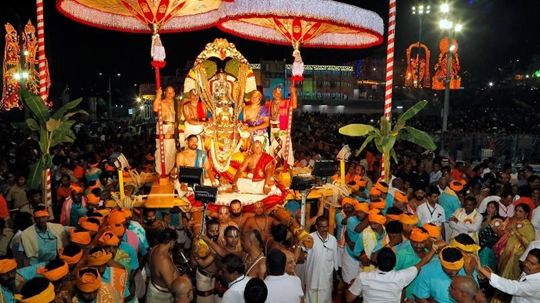
Other important festivals include:
1)Vaikuntha Ekadasi — Devotees believe that doors to Vaikuntha (heaven) open on this day. Pilgrims queue for hours to pass through the Vaikuntha Dwaram.
2)Rathasapthami — The Lord is taken out in seven processions on a single day, Symbolizing
the sun’s journey.
3)Pavitrotsavam — A festival for purification and renewal of rituals. Pushpayagam — The Lord is worshipped with thousands of flowers.
4)Ugadi, Diwali, New Year — Celebrated with special rituals and decorations.
Each festival brings together music, dance, Vedic chanting, and devotion, transforming Tirumala into a center of cultural as well as spiritual vibrance.
Hundi and Donations
A unique feature of Tirumala is its Hundi system, where devotees offer money, jewelry, and valuables as donations to Lord Venkateswara. The belief stems from the Puranas — that Lord Vishnu borrowed money from Kubera for his marriage, and devotees are helping repay that loan.
The temple receives hundreds of crores annually, making it the richest temple in the world. Donations include gold, silver, diamonds, and currency from across the globe. In addition to the traditional hundi, TTD has introduced e-Hundi facilities for online donors.
Funds collected are used for temple maintenance, social services, hospitals, schools, annadanam (free meals), and dharmic projects. Thus, the act of giving at Tirumala is not just religious — it contributes to society at large.
Tirumala Tirupati Devasthanams (TTD)
Established in 1933, the Tirumala Tirupati Devasthanams (TTD) is responsible for managing the temple and associated institutions. TTD oversees rituals, festivals, prasadam distribution, accommodation, and social service projects.
Key responsibilities of TTD include:
Pilgrim management — Darshan arrangements, queue systems, and crowd control. Annadanam — Free meals served daily to lakhs of devotees.
Education — Running schools, colleges, and Sanskrit universities.
Healthcare — Hospitals and mobile health services for pilgrims and locals.
Cultural preservation — Promotion of Annamacharya’s sankeerthanas, Harikathas, and spiritual literature.
TTD has also embraced technology by offering online seva booking, e-Hundi, and virtual queues, ensuring transparency and convenience. Its management model is admired worldwide for balancing tradition with modern needs.
Social and Cultural Impact
Beyond being a spiritual hub, Tirumala has a profound social and cultural impact. The Annadanam scheme ensures no devotee leaves Tirumala hungry, symbolizing equality and service. Daily, thousands sit together irrespective of caste or status, embodying the temple’s spirit of inclusiveness.
TTD funds schools, colleges, hospitals, orphanages, and dharmashalas, providing opportunities for underprivileged communities. Cultural activities like Annamacharya sankeerthana recitals, classical dance, and music concerts keep traditions alive.
The temple has also played a key role in the Vaishnavism’s spread across India, with
Ramanujacharya’s philosophy is deeply embedded in its rituals. Thus, Tirumala is not only a place of worship but also a center of learning, culture, and service.
Pilgrim Facilities
Given the massive crowds, TTD provides extensive facilities to ensure a smooth pilgrimage. These include:
Queue Complex — Well-structured halls with ventilation, water, and rest areas for waiting devotees.
Accommodation — From free dormitories to cottages and guest houses. Rooms are allotted online and at counters.
Transport — Free buses run within Tirumala; APSRTC buses and taxis connect Tirupati to Tirumala. Footpath climbers are given Divya Darshan tokens.
Laddu Counters — Special counters distribute prasadam efficiently. Annaprasadam Halls — Large dining halls where free meals are served.
Security, cleanliness, and medical facilities are prioritized. This large-scale management ensures pilgrims can have darshan peacefully despite the crowd.
Modern Developments
Tirumala has embraced modern technology while preserving its ancient traditions. Some notable developments include:
Online Booking Systems — For darshan, accommodation, and sevas.
(Link:- https://ttdevasthanams.ap.gov.in/home/dashboard)
Face Recognition Darshan — Recently introduced to prevent misuse of tickets. e-Hundi and Digital Donations — Facilitating global contributions.
Live Streaming of Sevas — Allowing devotees worldwide to witness rituals.
Green Initiatives — Ban on plastic, solar energy use, waste management, and eco-friendly buses.
These initiatives reflect the temple’s adaptability in serving global devotees while maintaining its sanctity.
Conclusion
Tirumala Tirupati stands as a timeless symbol of faith, culture, and service. From its Puranic origins to its modern management, the temple continues to inspire millions with its spiritual power and social contributions.
Lord Venkateswara is revered as Kaliyuga Vaibhavam — the savior of devotees in this age of darkness. Pilgrims believe that even a glimpse of the Lord removes sins and grants peace. Beyond the divine experience, Tirumala also represents the strength of collective devotion, where donations, service, and culture unite to create a living heritage.
In essence, Tirumala is not just a temple but a spiritual civilization, where tradition and modernity coexist. Its hills echo with the chant of “Govinda, Govinda!”, reminding humanity of eternal faith and divine grace.
“Om Namo Venkatesaya”
Note from the Author
This article on Tirumala Tirupati has been written with deep devotion and respect towards the sacred abode of Lord Venkateswara. The purpose of this work is to present the temple’s rich history, architecture, rituals, festivals, and its impact on society in a comprehensive yet simple manner for readers.
May Lord Venkateswara bless everyone with health, peace, and prosperity.
— Pallavi Challa Roll No: EC23B1014