
Kashmir Mahatamya — Chronicles from the paradise on Earth, PART-3
11/2/2025
Kashmir Mahatamya — Chronicles from the paradise on Earth, PART-3
The Vanished Roots of a Sacred Land
Before Islamic rule, Kashmir was a thriving center of knowledge, renowned for its contributions to Sanskrit literature, philosophy, and science. Thinkers like Abhinavagupta and Kalhana flourished here. However, the Islamic invasion in the 14th century, beginning with Shah Mir’s rule, led to the decline of its scholarly traditions. Temples and learning centers were destroyed, and Persian influences replaced the region’s ancient intellectual and cultural heritage. This article focuses on the Islamic advent on the region of kashmir and establishes its significance as a center of knowledge in ancient India .
Early Rule and the Advent of Islam
Rinchana(1320–1323 CE) , originally a Ladakhi prince, converted to Islam and adopted the name Sultan Sadr-ud-Din. He is considered the first Muslim ruler of Kashmir. Udayanadeva(1323–1338 CE), the Hindu ruler who briefly regained power before the establishment of more consistent Muslim rule. The last Hindu ruler of Kashmir was Udyan Dev. His Chief Queen Kota Rani was the de-facto ruler of the kingdom. With her death in 1339 the Hindu rule in Kashmir came to an end and thus was established the Muslim rule in Kashmir under Sultan Shamas-ud-din-whose dynasty ruled the valley for 222 years.
The Shah Mir Dynasty (1339–1561 CE)
Shah Mir (1339–1342 CE) established the first Muslim dynasty in Kashmir. His successors, including Jamshed (1342–1343 CE), Ala-ud-Din (1343–1354 CE), and Shihab-ud-Din (1354–1373 CE), consolidated Muslim rule. Qutb-ud-Din (1373–1389 CE) continued their policies, but it was Sikandar Butshikan (1389–1413 CE) whose reign remains infamous for forced religious conversions and destruction of Hindu temples. In stark contrast, his successor Zain-ul-Abidin (1420–1470 CE), also known as Budshah, is remembered for his tolerance, cultural advancements, and efforts to restore religious harmony. The later Shah Mir rulers, including Haider Shah (1470–1472 CE), Hassan Shah (1472–1484 CE), and Muhammad Shah (1484–1505 CE), witnessed increasing instability, leading to the decline of the dynasty.
The Chak Dynasty and Mughal Annexation (1505–1586 CE)
The Chak dynasty began with Muhammad Ghazi Shah (Ghazi Shah Chak) who reigned from 1505 to 1510 CE, marking an increased influence of Shia Islam in Kashmir. Muhammad Yousuf Shah strengthened the Chak rule from 1510 to 1537 CE but faced resistance. Sultan Ibrahim ruled from 1537 to 1555 CE, struggling with internal and external conflicts. Nazuk Shah’s reign from 1555 to 1561 CE marked the weakening of the Chak dynasty, leading to Mughal intervention.
Mughal Emperor Akbar the Great annexed Kashmir into the Mughal Empire in 1586 CE, bringing stability and integrating it into a larger political framework. Jahangir, who reigned from 1605 to 1627 CE, continued Mughal rule and developed gardens and infrastructure. Shah Jahan reigned from 1628 to 1658 CE and contributed architecturally, known for Shalimar Bagh. Aurangzeb, who reigned from 1658 to 1707 CE, consolidated Mughal rule with conservative policies. After the decline of Mughal power, Ahmad Shah Durrani annexed Kashmir into the Durrani Empire in 1752 CE, characterized by instability and heavy taxation. The Sikh Empire under Maharaja Ranjit Singh annexed Kashmir in 1819 CE, ending Durrani rule and imposing new taxes and laws.
The trauma of religious conversion in early Kashmir began significantly during the reign of Sikandar Butshikan, who ruled from 1389 to 1413 CE. Sikandar, also known as Sikandar Butshikan (translates to “Sikandar, the Iconoclast”), is infamous for his severe policies against Hinduism and other nonIslamic faiths in Kashmir. His reign marked a period of intense religious persecution and forced conversions. Sikandar’s policies included the destruction of Hindu temples, imposition of heavy taxes on non-Muslims (jizya), and forced conversions to Islam
Prior to Sikandar Butshikan’s reign, Kashmir had experienced a more tolerant and syncretic approach to religion, even under Muslim rulers. Zain-ul-Abidin, who ruled after Sikandar from 1420 to 1470 CE, is often noted for his efforts to reverse some of the damage done by Sikandar by promoting tolerance and restoring religious harmony. The Islamic tyrants who invaded Kashmir in 1300s as mentioned above cause lot of trouble to Hindus in the name of religion and conversion, who asked Hindus to convert whose evidences are provided in the Biography of Mohammed Araqui , someone very cruel, he aimed to destroy temples, shrines ,infedels and to end traditions and rituals
The Sikh and Dogra Rule (1819–1947 CE)
The Dogra dynasty began with Gulab Singh who reigned from 1846 to 1857 CE, founding the dynasty after the British sold Kashmir to him after the First Anglo-Sikh War under the Treaty of Amritsar. Ranbir Singh, who reigned from 1857 to 1885 CE, consolidated Dogra’s rule and expanded the kingdom’s infrastructure. Ranbir Singh also was the founder of Kashmir state. Next came Maharaja Pratap Singh ruled Jammu and Kashmir from 1885 to 1925. During his reign, he abolished forced labor, built roads and railways, improved public health and education, and implemented a land settlement to protect farmers. He also encouraged agriculture, industries, and self-government.
Then the very well-known last ruler of Kashmir nephew of Pratap Singh, Hari Singh came in, he ascended the throne of Jammu and Kashmir in 1926, thanks to British intervention that overruled his uncle’s chosen heir. Despite this controversial beginning, his reign saw some progressive steps. He established a legislative assembly with elected members, a first for a princely state in India. He even drafted a constitution, though its actual impact on the people is debated. Additionally, Singh made primary education compulsory, outlawed child marriage, and opened religious sites to lower castes. However, his support for an all-India federation where princely states held significant power remains a point of contention.
Partition and Accession to India (1947–1952 CE)
In 1947, following India’s independence from British rule, Jammu and Kashmir had the option of joining either of the new dominions, India or Pakistan, or remaining independent. Maharaja Hari Singh initially chose independence due to the partition violence and the need to consider his Muslim-majority population. However, in October 1947, facing an armed uprising in Poonch instigated by the Muslim Conference party and a Pakistan-backed Pashtun tribal invasion, Hari Singh appealed to India for help. India’s British Governor-General, Lord Mountbatten, advised the Maharaja to accede to India before any military assistance could be provided.
Consequently, Hari Singh signed the Instrument of Accession on 26 October 1947, joining Jammu and Kashmir to the Dominion of India, prompting India to send troops to repel the invaders, leading to the first Indo-Pakistan War. Under pressure from Prime Minister Jawaharlal Nehru and Deputy Prime Minister Vallabhbhai Patel, Singh appointed his son and heir, Yuvraj (Crown Prince) Karan Singh, as Prince Regent of Jammu and Kashmir in 1949, although he remained the titular Maharaja until 1952, when the monarchy was abolished by Nehru’s government. Additionally, Hari Singh was “ compelled” to appoint Sheikh Abdullah, a popular Kashmiri leader, as the prime minister of Kashmir. Singh had a contentious relationship with both Nehru and Abdullah. In 1952, Karan Singh was appointed ‘Sadr-eRiyasat’ (Head of State) and later became the Governor of the State in 1964.
KASHMIR — A CENTER FOR KNOWLEDGE AND THOUGHT IN ANCIENT INDIA
Acharya Abhinava Gupta
Madhuraja a wandering 74 years old great yogi who was also an great scholar from Madurai and was equally proficient in Khandana (smashing false wisdom) and Mandana (establishing truth) studied under Mahamahesvara Abhinavgupta for 4 years, Madhuraja writes in his stotram in the praise of Abhinavagupta
काश्मीरो जयति जगद्धििाविारः सः श्रीमानतिनवगुप्तदेतिके न्द्रः |
“Salutation to the king of spiritual masters Abhinavagupta, born in Kashmir, whose incarnation was for universal good”
He looked upon great Abhinava as compassionate Dakśinamurthi incarnate or reborn in Kashmir (दतिनामूतथिदेव) Abhinavaguptapāda was always in pursuit of knowledge which is why he studied under more than 50+ acharyas of all the discipline from Arhanta (jaina), Bauddha, Śākta, all branches of Śaivism, Veda, grammar, aesthetics, Vaishnava, nyaya, sankhya etc and he equally paid respect to all his masters from all disciplines in his works. Abhinavaguptapāda was the title given to him and his real name is unknown.
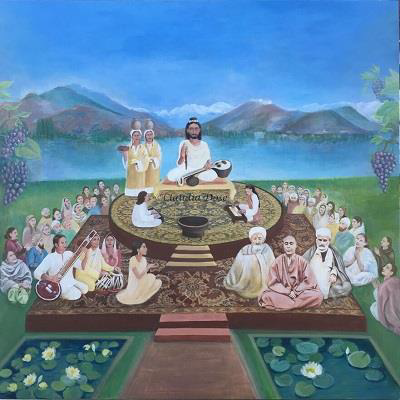
As an original thinker he shattered to pieces the established belief which laid heavy emphasis on caste and gender restrictions in relation to spiritual practice. He took to task those philosophical systems which held the prerequisite that spirituality required rigorous discipline–systems which made the quest for enlightenment the legitimate right of a chosen few. He abhorred the idea that spiritual revelation was only possible in a purely monastic surrounding, or that those caught in the householder way of life had to wait till the last portion of life before they could fully give themselves to spiritual pursuits.
Utpal Deva
Utpal deva who lived in Kashmir around the middle of 9th CE is one of the greatest Philosophers who was ever produced by India was a prominent philosopher and theologian associated with the tradition of Kashmir Shaivism, specifically the Pratyabhijna (Recognition) school. His contributions are critical to the development and propagation of this philosophical system, which emphasizes the recognition of one’s true divine nature.
Utpal deva lived near Srinagar at a place called Vicharnag- Soura. His father was Udyakar and mother was Vagheshwari. His ancestors came from Gujarat and had settled in Kashmir during the reign of Lalityaditya Muktapida. Utpaldeva was the disciple of another illustrious Saint-scholar Somananda who initiated the philosophical exposition of Trika by writing Sivadrishti. However, the metaphysical thought of Somananda was further augmented by Utpaldeva who established the school of Pratyabhijna — Doctrine of Recognition.Besides being a great philosopher Utpaldeva was also a mystical poet the gems of which is expressed in his work of Shivstotravali.
Laugakshi
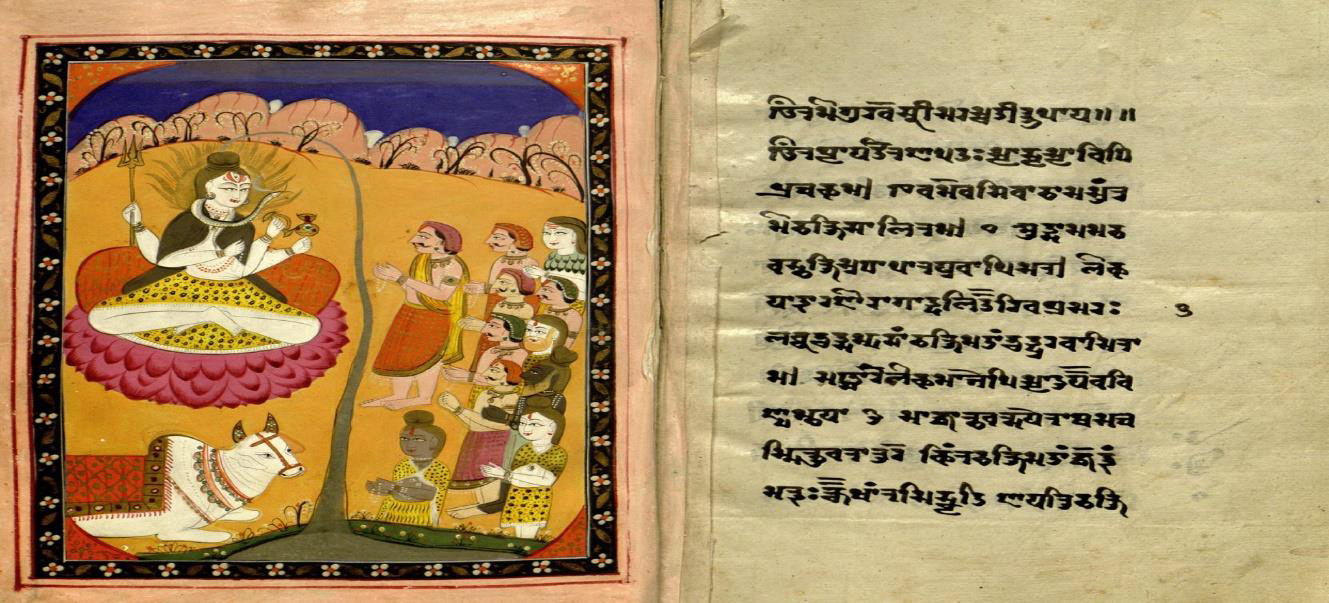
During Laugakshi’s time, Kashmir was a major centre of intellectual and scholarly activity. He is called the father of Kashmiri karam kand. He gave complete and elaborated way in his Grihya sutrani which we are practicing today in all the religious ceremonies of Kashmiri pandits. It is a complete manual in Sanatana dharma which gives us the details of domestic and religious ceremonies performed. The grihya sutras along with shautra sutras, agamic sutras deal with the rules of conduct for invoking Annapoorna , through offering the rice grains in Chula known as Daan in Kashmiri mark each stage of an individual’s life which is guided by this grihya sutrani .
Lalleshwari
Also known as Lal Ded, has had a profound and enduring influence on Kashmiri culture, particularly through her spiritual teachings and poetry. Here’s how her influence manifests in various aspects of Kashmiri culture. Lalleshwari’s teachings revitalized the Kashmir Shaivism tradition by emphasizing direct spiritual experience and inner realization over mere ritualistic practices. She promoted the concept of non-dualism (advaita) and the belief that the ultimate reality (Shiva) resides within oneself, accessible through devotion and self-awareness.
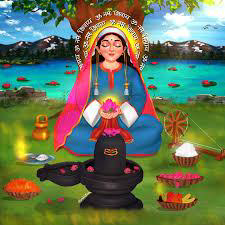
Lalleshwari’s devotional poetry, expressed through her Vakhs (poetic verses), contributed to the popularization of the Bhakti movement in Kashmir. Her verses were accessible to people from all walks of life, transcending religious boundaries and inspiring a deep sense of spiritual devotion among her followers. Lalleshwari’s Vakhs are considered a foundational text in Kashmiri literature. They are celebrated for their simplicity, lyrical beauty, and profound philosophical insights. Her poetry enriched the Kashmiri language, showcasing its expressive capabilities and capturing the essence of spiritual experiences. Through her poetry, Lalleshwari transmitted cultural values such as compassion, humility, and the pursuit of spiritual truth. Her teachings continue to resonate with Kashmiris as guiding principles for personal and communal life.
Lalleshwari’s emphasis on inner purity and ethical conduct influenced societal norms in Kashmir. Lalleshwari’s life as a female mystic and poet challenged traditional gender roles in Kashmiri society. She became a symbol of empowerment for women, demonstrating the potential for spiritual leadership and intellectual contributions irrespective of gender. Lalleshwari’s legacy continues to be celebrated through annual festivals, cultural events, and literary gatherings in Kashmir. Her teachings have been preserved through oral traditions, scholarly interpretations, and translations into various languages, ensuring their transmission to future generations.
Kalhana
Kalhana was believed to be born in Kashmir around the early 12th century AD. His family may have even served in the royal court, suggesting a deep connection to Kashmiri society. The Rajatarangini: Kalhana’s magnum opus (“River of Kings”), is a monumental chronicle of Kashmir’s history. Composed in Sanskrit between 1148 and 1149 AD, it narrates the region’s past from legendary origins to his own time.
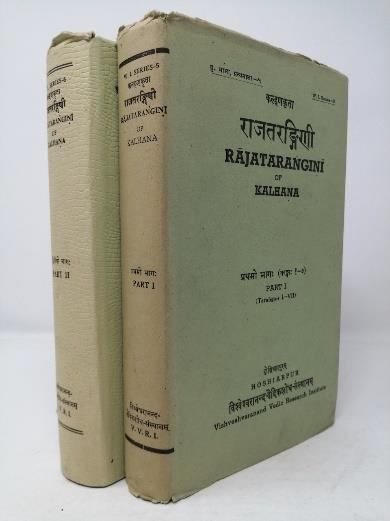
The Rajatarangini is not just a dry historical account. It’s filled with Kalhana’s observations on Kashmiri culture, politics, and religion. His dedication to preserving Kashmir’s rich heritage shines through. The breathtaking landscapes of Kashmir likely served as a source of inspiration for Kalhana. References to the region’s natural beauty might be found within the Rajatarangini. The text likely reflects the social customs, festivals, and traditions prevalent in Kashmir during Kalhana’s era. By studying the Rajatarangini, we gain valuable insights into Kashmiri life of that period.
The Rajatarangini remains a cornerstone of Kashmiri history. It has been translated into various languages and continues to be studied by scholars worldwide. Through Kalhana’s work, we can understand the evolution of Kashmiri society, politics, and religion over centuries. It provides a valuable link to the past for Kashmiris today. Kalhana’s relationship with Kashmir was one of deep love and respect. He dedicated his life to chronicling its history and preserving its cultural heritage for generations to come.
The Rajatarangini stands as a testament to his devotion and remains a vital source of information about this fascinating region.
Beyond them, we also have…
- Charaka and Vagbhata — Pioneers in Ayurveda
- Sushruta — Expert in Medical Sciences
- Vatéshwara — Contributor to Trigonometry
- Suyya — Expert in Hydraulic Engineering, also a minister of Avantivarman
- Jayanta Bhatta — Scholar of Law
- Panini — Master of Sanskrit Grammar
- Kalidasa and Rudrata — Renowned scholars of Sanskrit and Literature
- Bhāma — Philosopher of Aesthetics
- Shārangadeva — Expert in Musicology
- Vasugupta and Somananda — Philosophers of Advaita
- Vishnu Sharma — Author of Panchatantra, contributed to Moral Science
Both the list and the glory of Kashmir goes on…
Despite enduring severe political turmoil, Kashmir has always been and will forever remain the crown of Bhārata Mātā. It stands as an auspicious center of great thinkers and valiant kings, a land that has shaped India’s intellectual and cultural legacy for centuries.
And with this note, the Kashmiri Mahatmya series concludes.
From the AUTHOR, Hamsini Deshmukh ( ME23B2016), I am a great admirer of Kashmir and its alluring beauty, it’s my hobby to read about and explore Kashmir and this went on to be a motive for me to bring this article together… The invaluable legacy of India’s crown jewel-Kashmir and its long forgotten heritage should be popularized is what I contemplate.
I have an innate attraction towards Indian Heritage, classical music, yoga, fascinating historic legends, and all Indic stuff! I have learnt classical music for 5 years and taken extensive classes in Sanskrit shlokas for about 15 years, which inspired and developed fond interest in me to study about Mahabharata, Ramayana and I am currently trying to learn and understand the original 24000 verses of Valmiki Ramayana….