
Honoring India’s Bravest: A Tribute To Our Param Vir Chakra Heroes (part 1)
7/9/2025
For decades, India’s armed forces have acted as an unbreakable shield, confronting every threat from wars to terrorism and daring counter-insurgency missions. Time and again, these brave men and women have shown incredible courage, often giving their lives to protect our nation and its people. This article is a heartfelt tribute to some of the most distinguished soldiers of the Indian Armed Forces — warriors whose extraordinary valour earned them the nation’s highest military honour, the Param Vir Chakra(PVC).
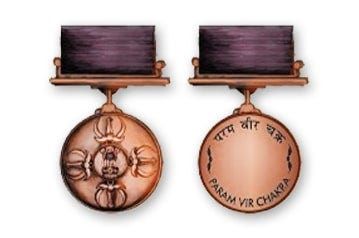
The PVC(Param Vir Chakra) is more than just a medal; it’s a symbol of immortal heroism, awarded only to those who display the ultimate bravery and self-sacrifice in the face of the enemy. Join us as we explore the inspiring stories of these legendary soldiers whose actions continue to ignite pride, gratitude, and an undying love for our nation.
The first hero we honor is a brave soldier who not only defended Kashmir from enemy forces but, in doing so, saved the very crown jewel of our nation.
1. Major Somnath Sharma
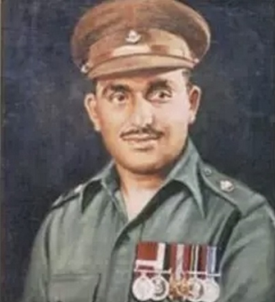
“ The enemies are only 50 yards from us. We are heavily outnumbered. We are under devastating fire. I shall not withdraw an inch but will fight to the last man and last round “:- were the final words of Major Somnath Sharma, relayed by a radio operator from Badgam village in Kashmir. His unit was facing a sudden attack by over 500 heavily armed Pakistani raiders who aimed to capture the Srinagar airport and ultimately take Kashmir. Knowing this, Major Sharma protected the front till his last breath so that Kashmir would remain India’s forever.
Born on January 31st, 1923, in Kumaon, Uttarakhand, into a Military family, His father, Major General Amar Nath Sharma, had served in the British Indian Army. From childhood, discipline and patriotism were part of his life.
Playing cricket, reading the Gita, and physical fitness were his passions. He joined the Prince of Wales Military College and later the Indian Military Academy, Dehradun, where he was commissioned into the 8th Battalion, 19th Hyderabad Regiment (later 4 Kumaon) in 1942.
Although recovering from a wrist injury (his left hand was in a plaster cast), he insisted on going to the battlefield with his men. On 3rd November, he, with 120 soldiers, was airlifted to Badgam village. Despite being highly outnumbered and low on ammunition, Major Sharma held his position, moving from post to post to motivate his men, organized the defense, and supplied ammunition with one hand. His courage saved Srinagar and prevented Kashmir from being captured.
He faced death calmly and courageously, proving that true soldiers never retreat, and the Indian army motto reflected in Major Sharma’s life.
“ If death strikes before I prove my blood, I swear I’ll kill death.”
If this story is a testament to resilience, the next one of Rama Raghoba Rane shows what true defiance looks like.
2. Lieutenant Rama Raghoba Rane
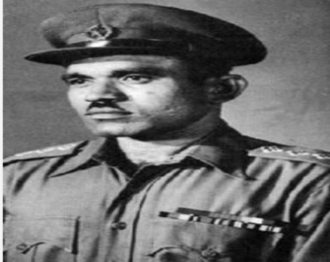
The fearless officer of the Indian army, Rama Raghoba Rane, was born on June 26, 1918, in Karwar district, Karnataka. His courage and sense of duty are still taught during army training and in NCERT textbooks. He is remembered as one of the bravest officers of the Indian army.
During the Indo-Pak war of 1947–48, Pakistani forces and raiders had occupied key regions of Jammu and Kashmir. The Indian Army launched an operation to reclaim Rajouri, a strategically important town. However, the road to Rajouri was blocked with landmines, felled trees, and enemy fire. Despite being wounded by mortar shells, Rane fearlessly led his team of sappers for four continuous days. Under relentless enemy attack, he cleared minefields and roadblocks, enabling tanks and infantry to advance. His fearless actions ensured the Indian forces reached Rajouri in time and liberated it on April 13, 1948. “A soldier fights not because he hates what is in front of him, but because he loves what is behind him”. Lieutenant Rane truly lived this motto.
The legacy of courage doesn’t end there. We now turn our attention to another hero. Major Dhan Singh Thapa, whose story of unwavering patriotism and sacrifice is a testament to the idea that true courage speaks more than any work or deed.
3. Major Dhan Singh Thapa
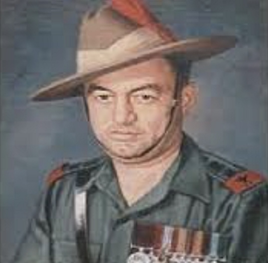
“It is better to die than to live like a coward,” is the motto of the 8th Gorkha Rifles, into which Major Dhan Singh Thapa was commissioned in 1949. Born on 10th April 1928 in Shimla, Himachal Pradesh, he was a fearless officer of the Indian Army. Known for his courage, leadership, and unshakable patriotism, he became a symbol of valour during one of India’s most difficult military challenges -the Sino-Indian war of 1962.
On the morning of 20th October, the sky roared with Chinese artillery and mortar fire. The earth
shook, communications were cut, and yet Major Thapa’s voice rang out -calm, steady, and unyielding. The first assault came.. And was repelled. The second came and was thrown back. Even the Third, backed by tanks, failed to break the spirit of the Gorkhas.
When ammunition finally ran dry, Major Thapa did not surrender. He leapt from his trench, bayonet in hand, charging into the enemy ranks with the battle cry -” Jai Mahakali! Ayo Gorkhali!” surrounded and overpowered, he was taken prisoner, presumed dead, and awarded the PVC posthumously. Months later, India learned her lion had returned alive.
Major Dhan Singh Thapa’s life tells us that true bravery is not just in fighting when victory is certain. It is standing when hope itself has fallen. He stood not for himself, but for every soldier, every citizen, and every inch of our motherland. We can say, “He did hold the post because it was easy. He held it because it was his”.
That was a story of a hero who stood when hope had fallen. What follows is the journey of an air warrior, Flying Officer Nirmal Jit Singh Sekhon, who, alone in the sky, turned the tide of battle.
4. Flying Officer Nirmal Jit Singh Sekhon
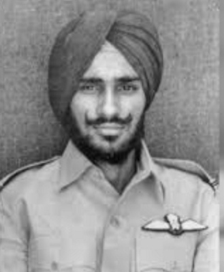
The only Air Force officer among the legends to be awarded the Param Vir Chakra, displaying intense bravery in aerial combat during the 1971 war. Born on 17 July 1943, in Isewal village, Ludhiana district, Punjab, he grew up in a disciplined Air Force Family, inspired by his father’s service. He joined the Indian Air Force in 1967, trained as a fighter pilot, and was commissioned in June 1967.
In 1971, war broke out between India and Pakistan. On 14th December 1971, six Pakistani Sabre aircraft roared towards Srinagar Air Base. Heavily outnumbered, Flying Officer Sekhon did not hesitate- he powered up and raced down the runway, and lifted into the freezing sky. Above the valley, the odds were impossible, Sir Sabres against one GNAT, but Sekhon does not flinch, he dived, locks on, bang! -The first Sabre bursts into the smoke. A quick roll, a tight run, and bang! The second Sabre spirals down. The enemy is stunned; their formation is broken. He chased the third, bullets tearing through the clouds, but his own aircraft shuddered. Enemy fire hits into fuselage. The warning light flashed.
Still, he kept fighting, Kept pressing, kept protecting his base. Only when the Sabres turned back, abandoning their mission, did his GNAT lose its last breath. He never returns .” But that day, one man, alone in the sky, turned the tide”.
We’ve seen how one man in the sky can change a battle’s course. Now, let’s witness the bravery of a soldier on the ground, Major Hoshiar Singh Dahiya, who, though wounded, fought for three continuous days to turn the tide of a battle.
5. Major Hoshiar Singh Dahiya
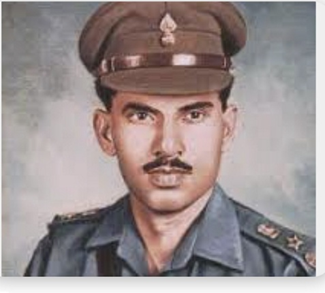
During the Indo-Pak war of 1971, Shankargarh was crucial for the Indian forces, but then came the Lion of Jarpal Major Hoshiar Singh Dahiya, and one voice cut through the chaos of shelling of mortars and bullets, “Grenadiers.. Follow me,” Major Hoshiar Singh charged first into enemy trenches. Wounded yet unshaken, he fought for three days, repelling every attack. At the darkest moment, he grabbed a machine gun himself and turned the tide of battle. The tricolor flew over Jarpal, the enemy was crushed, India stood victorious, and Major became immortal in the heart of India.
Born in the quiet village of Sisana, Sonepat, Haryana, was the embodiment of courage, leadership, and unwavering patriotism. Coming from a humble farmer’s family, he grew up with values of discipline, hard work, and dedication — qualities that later defined his military career. Commissioned into the 3rd Battalion of The Grenadiers Regiment.
In 1963, Major Hoshiar Singh quickly proved himself to be an officer who led from the front. Known for his tactical brilliance and compassion for his men, he commanded respect from peers and subordinates alike.
As we mentioned above, about his courage at the warfront, also after retirement from the army, he remained committed. To social causes and the welfare of ex-servicemen. Major Hoshiar Singh’s life teaches us one timeless lesson: “When the nation calls, true warriors do not count the cost -they stand, fight, and, if necessary, give their all”.
The story of Major Hoshiar Singh Dahiya showed a Grenadier who led from the front, even when wounded. What follows is the story of Major Ramaswamy Parameshwaran, a smiling warrior whose calm under fire turned an ambush into a victory.
6. Major Ramaswamy Parameshwarn
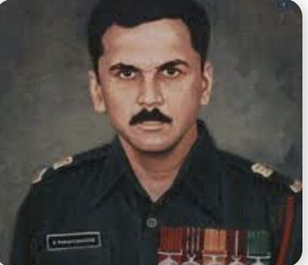
Known for his cool temperament, sharp tactical thinking, and ability to connect with soldiers even in war-like situations, Major Ramaswamy Parameshwaran was born in a middle-class Tamil-Brahmin family on 13th September 1946, in Mumbai, Maharashtra. He initially served as a teacher in Mumbai before joining the Officers Training School, Chennai, and was commissioned into the 15th Battalion, Mahar Regiment in 1972. His troops loved him for his humility and care for their welfare.
Nicknamed “The Smiling Warrior “, he became an inspiration to generations of soldiers. During internal conflicts in Sri Lanka, India deployed peacekeeping forces, and one unit led by Major Parmeswaran was returning from a search operation in the dark forest of Sri Lanka. The night is still, then Gunfire !. An ambush! Bullets slice through the air. Most would have taken cover, but Major Parameshwaran did not step back. He looks at his men, calm even in the face of death, and says, “Follow me.. from the rear- we will turn the trap into a victory.” With a sudden maneuver, he led his troops around and attacked the militants from behind, and confusion gripped the enemy. In the fierce firefight that followed, Major personally killed five militants.
Alas, a close-range shot tore into his chest. Even with blood flowing, he charged forward, wrested the rifle from his attacker, and shot him down. Only when his men had secured the area did he allow himself to fall. A faint smile still rested on the face of a warrior who had given everything for his country.
Major Parameshwaran’s story is a testament to a leader’s tactical brilliance. Our final story is of Captain Vikram Batra, a hero of the Kargil War, who gave a famous war cry, “Ye Dil Maange More!”, and proved that a soldier’s patriotism knows no bounds.
7. Captain Vikram Batra
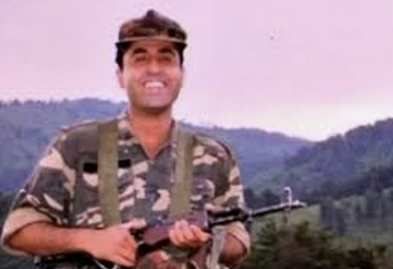
“Either I will come back after hoisting the tricolor, or I will come back wrapped in it. But I will come back for sure .” This famous quote belongs to Captain Vikram Batra(also known as SHERSHAH), who is still remembered for his unmatched courage during the 1999 Kargil war in capturing points 5140 and 4875 (strategic mountain peaks ). He was fatally shot while rescuing a fellow officer and pushing his men to safety, sacrificing himself without hesitation. not once but twice in the course of his service.
Captain Batra was born on 9 September 1974, in Palampur, Himachal Pradesh, coming from a normal family with no army background (both parents were school teachers). He was filled with patriotism from a young age and joined the IMA, Dehradun, in 1996, and in December 1997, he was commissioned into the 13th Battalion of the Jammu and Kashmir Rifles. When the Kargil war broke out in May 1999, Pakistani intruders had occupied Indian posts on the Line of Control.
To recapture the strategic point 5140, Captain Batra led his men through treacherous, steep terrain under enemy fire. In a fierce hand-to-hand combat, he personally killed several enemy soldiers. Upon victory, he famously radioed back with the now iconic phrase:” YE DIL MAANGE MORE!”. The mission was a resounding success and boosted troop morale. But during the capture of point 4875, he was mortally wounded while saving a fellow officer, leaving behind a legacy of courage that inspires every Indian soldier.
The stories of these Param Vir Chakra awardees are not just tales of the past, but guiding lights for our future. They remind us that courage is not the absence of fear, but the will to rise above it for the sake of the nation. Each of these heroes lived and died with an unshakable devotion to India, proving that true patriotism is measured in sacrifice, selflessness, and an undying spirit. As we honor their memories, let us also carry their legacy forward — by living with integrity, serving our communities, and always placing the nation above ourselves. Their bravery is eternal, their sacrifices immortal, and their spirit continues to guard every heartbeat of our motherland.
This journey of valor does not end here — many more untold stories of our Param Vir Chakra heroes await. Stay with us for Part 2, where we continue to celebrate the courage of India’s bravest. Jai Hind!
From The Author, Vikram Singh (ME24B2047)
I have always been deeply inspired by the Indian Army and the unmatched courage of our soldiers. My fascination began in childhood, with the movie LOC Kargil igniting a lifelong passion to learn about the heroes who protect our nation. Through reading, watching, and listening to their stories, I have drawn immense inspiration from legends like Major Sandeep Unnikrishnan, Captain Vikram Batra, Second Lieutenant Arun Khetrapal, and many more. This article is my tribute to their sacrifices, and my hope is that it inspires others to honor their legacy and keep their spirit alive in our hearts. Jai Hind!.